


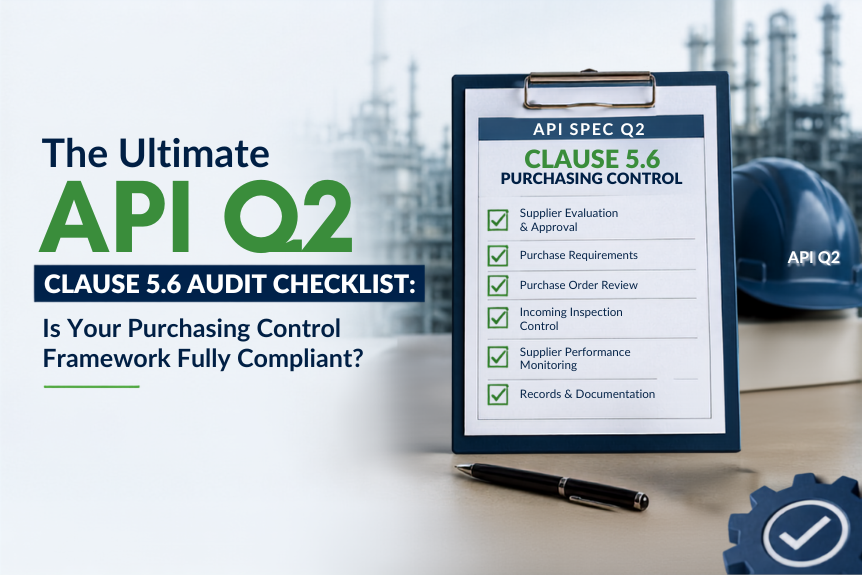
In the oil and gas service industry, supplier performance directly affects service quality, operational reliability, and customer satisfaction. A single failure in purchased materials, equipment, or outsourced services can lead to project delays, increased costs, and compliance risks. That is why API Spec Q2 places significant emphasis on purchasing controls through Clause 5.6.
Organizations preparing for certification or surveillance audits often discover that purchasing is more than simply selecting vendors. It requires a structured process for supplier qualification, evaluation, monitoring, and documentation. This API Q2 Clause 5.6 Audit Checklist explains what auditors expect and how organizations can strengthen their purchasing control framework before an audit.
Table of Contents
ToggleUnderstanding API Spec Q2 Clause 5.6 Purchasing Control Requirements
According to API Spec Q2, Clause 5.6 focuses on ensuring that purchased products, materials, and externally provided services consistently meet specified requirements. It requires organizations to establish a controlled purchasing process that minimizes risks associated with suppliers while maintaining service quality throughout the supply chain.
An effective purchasing system demonstrates that suppliers are selected based on objective criteria, monitored regularly, and re-evaluated whenever performance issues arise.
Why Purchasing Control Matters in API Spec Q2?
Unlike general quality management standards, API Spec Q2 is designed specifically for service supply organizations within the petroleum and natural gas industry. Because suppliers often contribute directly to service delivery, weak purchasing controls can impact operational safety, customer requirements, and regulatory compliance.
A well-defined API Q2 Purchasing Control process helps organizations:
- Reduce supplier-related risks
- Improve service consistency
- Ensure purchased items meet technical specifications
- Strengthen traceability
- Prepare confidently for certification and surveillance audits
API Q2 Clause 5.6 Audit Checklist
Before your audit, verify that the following elements are fully implemented.
1. Documented Purchasing Process
Your organization should maintain documented procedures describing how suppliers are selected, approved, monitored, and managed.
The procedure should clearly define:
- Supplier approval criteria
- Purchasing responsibilities
- Verification activities
- Acceptance requirements
- Record retention
Maintaining consistent process documentation ensures purchasing activities are standardized, traceable, and readily available for audit verification.
2. Supplier Qualification Process
Every critical supplier should undergo a structured approval process before being added to the approved supplier list.
An effective API Q2 Supplier Qualification process includes:
- Technical capability assessment
- Experience in similar projects
- Certifications and licenses
- Manufacturing or service capacity
- Financial stability
- Previous performance history
Organizations should maintain documented evidence supporting supplier approval decisions.
3. Supplier Evaluation and Monitoring
Supplier approval should never be considered a one-time activity.
An ongoing Supplier Evaluation process should measure supplier performance using objective criteria such as:
- Product quality
- Delivery performance
- Nonconformities
- Corrective action responsiveness
- Customer complaints
- Service reliability
Tracking supplier performance KPIs enables organizations to measure supplier reliability, identify recurring issues, and drive continual improvement over time.
4. Risk-Based Purchasing Decisions
Not every supplier carries the same level of risk.
Organizations should classify suppliers based on factors including:
- Criticality of supplied products
- Impact on customer requirements
- Operational risks
- Historical performance
Higher-risk suppliers typically require increased oversight, audits, or additional verification activities.
5. Purchase Order Controls
Purchase documents should communicate all applicable technical and quality requirements.
Purchase orders should include:
- Product specifications
- Applicable drawings
- Inspection requirements
- Acceptance criteria
- Documentation requirements
- Traceability requirements where applicable
Incomplete purchasing information often leads to supplier misunderstandings and audit findings.
6. Verification of Purchased Products and Services
Receiving purchased materials does not automatically confirm compliance.
Organizations should verify purchased products through activities such as:
- Incoming inspections
- Material verification
- Documentation review
- Test certificate verification
- Functional inspections where required
The level of verification should reflect supplier risk and product criticality.
7. Supplier Performance Records
Auditors frequently request evidence showing supplier monitoring activities.
Maintain records including:
- Supplier scorecards
- Performance reviews
- Corrective actions
- Audit reports
- Delivery metrics
- Inspection results
Well-maintained records demonstrate continuous supplier oversight.
8. Supplier Audits
For critical suppliers, conducting periodic audits provides additional confidence that quality requirements continue to be met.
An API Q2 Supplier Audit may evaluate:
- Quality management processes
- Manufacturing controls
- Inspection activities
- Personnel competency
- Calibration systems
- Corrective action effectiveness
Supplier audits also help identify opportunities for continuous improvement.
Common Nonconformities Found During API Q2 Purchasing Audits
Organizations often receive audit findings because purchasing controls are not consistently implemented.
Common issues include:
- Missing supplier evaluation records
- Incomplete approval criteria
- Outdated approved supplier lists
- Poor monitoring of supplier performance
- Missing inspection records
- Undefined purchasing responsibilities
- Inadequate risk assessments
- Lack of documented evidence supporting supplier approval
- Addressing these gaps before certification significantly improves audit readiness.
How to Evaluate Supplier Performance Under API Spec Q2?
Supplier performance should be evaluated using defined criteria that measure the supplier’s ability to consistently meet quality, delivery, technical, and compliance requirements.
Key evaluation factors include:
- Quality Performance: Monitor product/service conformity, defect rates, nonconformities, and corrective action effectiveness.
- Delivery Performance: Evaluate on-time delivery, lead times, and reliability.
- Technical Capability: Assess supplier expertise, resources, equipment, and ability to meet technical specifications.
- Compliance: Verify adherence to contractual requirements, industry standards, certifications, and customer expectations.
- Responsiveness: Review communication, problem-solving ability, and response to quality issues.
- Cost Performance: Evaluate overall value, including quality-related costs and delivery efficiency.
Organizations should use supplier scorecards, performance indicators, audits, and periodic reviews to classify suppliers and determine whether corrective actions, increased monitoring, or re-approval are required.
For API Spec Q2 Clause 5.6 Purchasing Control, supplier performance evaluation should be risk-based, with critical suppliers receiving more frequent monitoring and assessment to ensure consistent quality and service delivery.
Best Practices for Strong API Q2 Compliance
Building an effective purchasing system requires continuous monitoring rather than periodic document updates.
Organizations can strengthen API Q2 Compliance by:
- Reviewing supplier performance quarterly
- Maintaining digital supplier records
- Using measurable supplier KPIs
- Updating approved supplier lists regularly
- Conducting supplier audits for critical vendors
- Providing procurement personnel with API Q2 awareness training
- Integrating purchasing risks into management review meetings
These practices not only improve audit performance but also enhance operational efficiency.
Conclusion
Meeting Clause 5.6 requirements go beyond maintaining an approved supplier list. It requires a structured purchasing framework that supports risk management, supplier performance, and continual improvement.
By implementing a robust purchasing control process and maintaining complete documentation, organizations can confidently demonstrate conformity with API Q2 Certification Requirements while improving operational reliability and customer confidence. Investing in strong purchasing controls today helps reduce audit findings, strengthen supplier relationships, and support long-term business success.